Chasing 2,000 Horsepower: The Aerodynamics Behind the Goodwood Speed Record
How Dutch Drone Gods, Red Bull Advanced Technologies, and bespoke carbon monocoque fairings shattered the 350 km/h barrier to trail electric hypercars up the world's most treacherous hillclimb.
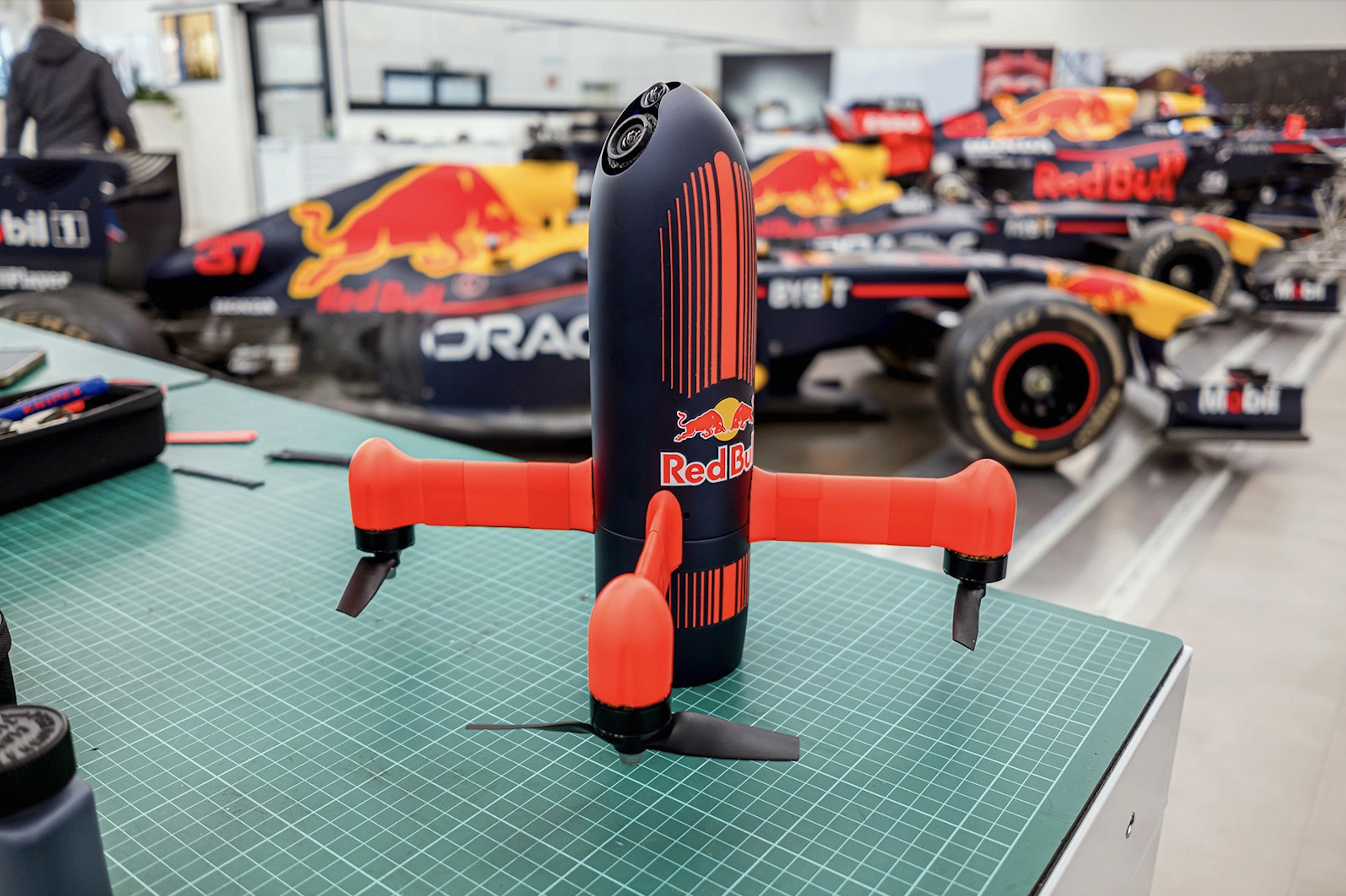
- The 350 km/h Barrier: Standard quadcopters suffer catastrophic turbulent drag above 200 km/h. Engineers designed a tear-drop composite monocoque fuselage tested in F1 wind tunnels.
- Propulsion Demands: Custom 2812 stators turning glass-reinforced nylon props at 42,000 RPM on an 8S (33.6V) battery, drawing 220A burst current.
- Zero-Margin Precision: Navigating the 1.86km hillclimb required pilots to fly 30cm off the rear wing while clearing 100-year-old stone walls and hay bales.
GOODWOOD ESTATE (2 September 2026) — When an electric fan car like the McMurtry Spéirling accelerates from zero to 100 km/h in 1.4 seconds, traditional trackside camera cranes and wire-cams become instantly obsolete. For decades, the Goodwood Festival of Speed relied on static telephoto shots. That era ended when custom high-velocity FPV chase drones rewrote the rulebook of sports cinematography.
At 300 km/h, aerodynamic drag squares exponentially. Standard boxy quad frames experience violent prop wash oscillations that burn out electronic speed controllers within seconds. To overcome this, aerodynamicists designed a continuous carbon-fiber teardrop shell that channels cooling ram-air directly across the ESC heat sinks while minimizing profile turbulence.
“When you dive into the flint wall corner at 310 kilometers per hour, you have twelve inches between the hypercar wing and ancient stone masonry. There is no second take.”
Piloting required a custom low-latency radio link broadcasting at 1000Hz via ExpressLRS with dual-band Gemini redundancy, ensuring zero frame degradation as the quad sped through thick English tree cover along the famous hillclimb.